Those who argued that President Donald Trump should have intervened to save Iranian protestors may be about to get their wish. What happens next?
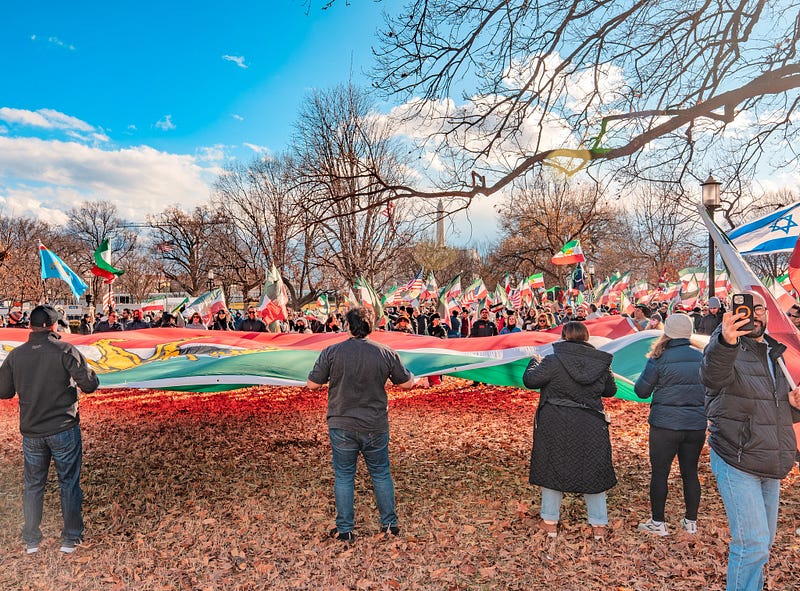
In the months since massive protests rocked Iran, critics on the right and left alike have asked some version of the same question: Why isn’t President Donald Trump doing more about Iran?
After all, tens of thousands of Iranian protestors have reportedly been killed in brutal crackdowns. The regime has jailed dissidents, tightened internal security, and continued enriching uranium. Trump’s critics have argued that if America truly stood for freedom, it would intervene — militarily if necessary — to confront the Islamic Republic.
Well.
Be careful what you wish for.
Because right now, the drums of war are getting louder.
Recent high-resolution satellite imagery analyzed by experts and reported by The Jerusalem Post shows that Iran has backfilled tunnel entrances at the Isfahan nuclear complex with earth. Defensive layers have been reinforced. The Islamic Revolutionary Guard Corps (IRGC) has reportedly surged units to protect ballistic missile infrastructure across the country.
That sounds ominous — and it is.
Backfilling tunnel entrances makes facilities harder to destroy from the air. It dampens the effects of bunker-buster bombs. It complicates special forces raids. It preserves highly enriched uranium stockpiles. In plain English: Iran appears to be preparing to withstand a U.S. strike.
That’s very different from preparing to launch one, but it’s still an ominous sign of what might happen in the days and weeks to come. Iran’s rulers are, no doubt, nervously considering what just happened to Nicholas Maduro in Venezuela.
Maduro was wealthy, well-entrenched, and protected by the finest personnel and weaponry money could buy. It didn’t help him. U.S. forces were able to extract Maduro without the loss of a single American soldier.
Now, Washington has deployed assets to the Persian Gulf. Carrier groups. Missile defenses. Public rhetoric is signaling readiness. The administration is demonstrating — theatrically, some analysts say — that it is willing to use force if negotiations collapse.
It’s classic coercive diplomacy.
Each side signals strength. Each side hardens assets. Each side tries to shape the other’s behavior without crossing the line into open war.
But history teaches us that this is the phase where miscalculation happens.
Iran’s military doctrine is built around dispersal and survivability. The IRGC secures missile sites across the country to ensure retaliatory capability. If attacked, Iran wants to be able to hit back.
A U.S. strike on nuclear facilities would almost certainly trigger retaliation. Regional bases could be targeted. Proxy militias could activate. Energy markets would convulse. The Strait of Hormuz could become a flashpoint. Israel would be pulled deeper in. And suddenly, the “limited strike” would not look so limited.
Of course, Israel has, in recent days, expressed a willingness to fight Iran alone if necessary.
At the same time, Tehran and Washington are still talking.
That matters.
The real question is not whether war rhetoric is escalating. It is whether both sides believe escalation serves their interests more than negotiation does.
If talks collapse — if either side crosses a perceived red line — events could move very quickly.
Those who demanded intervention in the name of saving Iranian protestors may be closer than ever to seeing American force used against the regime they despise.
But they should also ask themselves: What happens the day after?
Because history suggests that starting wars is far easier than ending them — and regime change rarely unfolds the way its advocates imagine.
The drums of war are beating from Washington to Tehran…and beyond.
The question now is whether they are warning signals — or the first bars of something far larger.
(Contributing writer, Brooke Bell)